Showing posts with label sauce. Show all posts
Showing posts with label sauce. Show all posts
Friday, October 31, 2014
How to Make Danish Pancakes with Ice Cream and Fruit Sauce A Traditional Dansk Pandekage Recipe
When I was growing up my mother used to make Kale Soup then have Danish pancakes for dessert. As children we used to cling to our mother while constantly asking when the pandekager were done. Years later, if there is one thing our family still loves to eat is danske pandekager or Danish Pancakes.
Danish pancakes are very similar to crepes. However, traditional Danish pancakes are served as a dessert. Also, it appears that the Danish pancakes are bigger in size than the crepes and possibly a little sweeter too.

Danish pancakes are very similar to crepes. However, traditional Danish pancakes are served as a dessert. Also, it appears that the Danish pancakes are bigger in size than the crepes and possibly a little sweeter too.
Ingredients:
- 1 cup of all-purpose flour
- 2 teaspoons of sugar
- a pinch of salt
- 2 eggs
- 2 cups of milk
- European butter for frying
- grated lemon peel
- optional filling for the pancakes such as sugar, fruit or nutella
See our YouTube video to see how we made the Danish pancakes too!
Cooking Utensils:
- a whisk or a fork
- small bowl
- spatula
- grater
- a large non-stick frying pan
- measuring cups
- measuring spoons
Directions:
- Add all ingredients (except butter) into the bowl. Mix well until all clumps are gone.
- Let the batter sit in a large measuring cup for 20 to 30 minutes.
- Now you are ready to start frying pancakes! Add a bit of butter to a non-stick skillet and heat until medium warm.
- Tilt the pan approx 90 degrees and pour batter from the top. The batter will, run down and fill the pan from rim to rim. You can also pour the batter in the middle of the pan and quickly make circling motions to distribute the batter all over the pan. The goal is to have as thin a batter layer as possible.
- Cook until the pancake is a bit stiff. Before you flip the pancake be sure the pancake is firm on the edges.
- When ready flip over the pancake. You will see it is nice and golden brown. Cook the other side for another 1 minute. The pancake should be light brown on both sides.
- When ready, remove the Danish pancake from the frying pan.
- Repeat the steps until you have used up all of the batter.
 |
| The smell of danske pandekager on the pan is sure to attract everyone in the neighborhood. |
In Denmark, pandekager are normally served at kaffetid (coffee hour) at 3 p.m. Formally we usually have coffee or tea with the pancakes. If we have guests, we serve the pancakes on our Royal Copenhagen China and our Georg Jensen silverware.
Danske pandekager can be eaten in many ways. The traditional way is to eat Danish pancakes is to drizzle sugar or marmelade in the center of the pancake. Then roll up the pancake into a roll. My favorite way, albeit the messiest way is with vanilla ice cream and home made fruit sauce. Please see our blog and YouTube video (below) on how to make home made fruit sauce too!
Danske pandekager can be eaten in many ways. The traditional way is to eat Danish pancakes is to drizzle sugar or marmelade in the center of the pancake. Then roll up the pancake into a roll. My favorite way, albeit the messiest way is with vanilla ice cream and home made fruit sauce. Please see our blog and YouTube video (below) on how to make home made fruit sauce too!
A more modern way to eat Danish pancakes is with bananas and Nutella (Chocolate hazelnut spread). We never had Nutella with our pancakes growing up in Denmark. It is probably the last 10 or 15 years that eating Danish pancakes with Nutella is a popular choice too.
Filling ideas:
- fresh fruit - cut up strawberrys, bananas, blueberries, raspberries, etc
- jam or jelly
- sugar
- whipped cream
- Nutellla

Monday, October 6, 2014
Romesco Sauce

Back when I was still trying to figure out what to do with my professional life, I was overwhelmed by the realization that many people chose their paths thanks to seemingly random accidents of history. Someone buys you a chemistry set at just the right birthday, or a beloved family member is stricken with a poorly-understood illness, or you check out a book of folk tales from one tradition or another, and suddenly your life course is set. Tens of thousands of hours will be spent in the lab, or on fieldwork, or wherever, just because of how things happened to shake out one day. Shouldnt the decision come from some deeper, internal place, so that you know its the Real Right Answer? It all seemed so terrifyingly haphazard and fragile.
But as I got older (and as I let go of some of my anxieties), I realized that when you find things that speak to you, it doesnt seem to matter how they came to be. And if you love a particular professional path—or anything, really—because it reminds you of loving a particular time in your life or a particular person, well... thats really not the worst thing in the world. In fact, its kind of great.
The other morning, I was downtown swapping out a bum computer charger, and saw the entire soccer (or, if you will, fútbal) team from Valencia inside the Apple store. And I ended up ridiculously, giddily excited, telling the story to everyone I talked to that day. Which was strange. Sure, there was the little bit of celebrity-worship, and the fact that these were some good-looking guys in really, really good shape. But when it comes down to it, I dont care much about sports. At all. My reaction was a bit of a mystery, until I realized—yeah, I could care less about soccer. But I have a friend in Spain.
To be more specific, its the Basque Country that holds a special place in my heart. But it seems to extend to a fondness for all things Iberian. When I realized this, I was a little bit sheepish at my automatic reaction. But really, why not? Why should I chide myself for gushing over a sports team that I dont really care about? Why not just open myself to these warm fondnesses, no matter how they came to be, and go home and make some romesco?
To be fair, its easy to have a love connection with romesco, even if youve never been close to Spain. This sauce is so, so good. It is the king of all sauces. Dried chilies, nuts, red wine, toasted bread, garlic, and (of course) olive oil are ground into a rich red paste. It tastes like nothing else, and pairs beautifully with everything from eggs to asparagus. In Spain (Catalonia in particular), its made every year to eat with calçots, spring onions that are grilled and served, dripping with romesco, in an amazing festival called a calçotada. I havent had the good fortune to attend a calçotada myself, but was able to create a reasonable approximation by pairing the romesco with some grilled leeks from a friends garden. Did I enjoy it more because of my personal experiences? Probably. Because yes, your life is shaped by terrifyingly random turns and chance. And it can be delicious.

Romesco Sauce
yields ~2 cups
Romesco can be made many ways, so feel free to play around. Ive used fresh tomatoes (and even sun-dried, which worked surprisingly well), roasted the garlic in the oven, and tried a few different kinds of chiles. All were delicious, but this version here represents my sort of rich, perfect ideal of romesco.
5 dried chile, of the rich-yet-not-too-spicy variety, like anchos (I used the last of my Basque choriceros for this batch)
~1/2 cup olive oil, divided
8 cloves garlic, peeled and thickly sliced
1/3 cup mixed almonds and hazelnuts
1 slice crusty bread/baguette
1/2 cup tomato puree (or a slightly larger amount of grated fresh tomatoes)
1 Tbsp sherry vinegar
splash red wine
salt to taste
Place the dried chiles in a small bowl, and cover with boiling water. Let sit to rehydrate while you prepare the rest of the romesco, turning or pressing them down to make sure they are all submerged.
Heat 1/4 cup of the olive oil over a medium heat in a skillet. Add the garlic, and saute, lowering the heat as needed so they brown evenly, until they are a dark golden, ~15 minutes. Transfer the garlic from the skillet to a food processor.
Add the nuts to the skillet, and cook for a few minutes, until they darken and become fragrant. Add to the garlic in the food processor.
Place the bread in pan, and toast until golden on each side. Add to the food processor.
Add the tomato puree to the pan (be careful of spitting!), and cook, stirring occasionally, until it thickens considerably and the oil separates out, ~7 minutes. Transfer to the food processor.
Drain the chiles, remove the stems and seeds and add them to the mixture, along with the vinegar, wine, and remaining 1/4 cup of olive oil. Process until it is reduced to nubby-yet-relatively-smooth puree. Add more olive oil if needed (I sometimes will add a bit of water to adjust the consistency, which Im sure the Europeans would scoff at, but I cant be quite that heavy-handed with the olive oil). Add salt to taste, and add more wine or vinegar if needed to bring out the flavors. Serve with grilled leeks, eggs, asparagus, or whatever else you desire.
Thursday, October 2, 2014
Danish Christmas Rice Pudding with cherry sauce
Risalamande was created in the last part of the 19th century. In the early 1900s, risalamande experienced an increase in popularity, being touted as a "savings" dessert because the ingredients were cheap and easy to get. The dessert is made out of rice pudding mixed with whipped cream, vanilla, and chopped almonds. The delicious and easy dessert is usually served cold with warm cherry sauce (kirsebærsauce).

Below is a simple Danish Christmas Rice Pudding with cherry sauce recipe. The first stage is to make the rice pudding. The second stage is to make the risalamand.
1st Stage is to make the rice pudding (in Danish risengrød):
Ingredients to make the rice pudding
1 1/4 cup water
1 cup white long-grained rice (Grødris)
4 1/2 cup milk
2 teaspoons of vanilla
2 cups of chopped whole almonds
1 almond (do not chop)
Directions to make the rice pudding:
The first stage is to make the rice pudding. Place water and rice in a medium cooking pot, cover with a lid and simmer for 2 minutes. Add milk and vanilla and simmer over low heat for 40-45 minutes until rice is tender. (Stir often to make sure the milk does not burn, especially the last 30 minutes.) You may have to turn the heat all the way down as low as your stove will allow and cover with a lid for the last 15 minutes. Then, put the rice pudding in a container and cool it down in the refrigerator.
While the rice pudding is cooling you can blanch almonds. Place the 2 cups of almonds in a small dish and pour boiling water over to cover. Let sit in water for 1 minute, drain and rinse with cold water. Pat dry and slip the skins off. (I usually blanch two almonds in case I have trouble with one.) Then, chop the almonds. Stir in the chopped almonds into the bowl of cool rice pudding.
The 2nd stage is to make the risalamande.
Ingredients to make the risalamande:
Bowl of cool rice pudding with chopped almonds
1 1/2 cup whipping cream
4 tablespoon of sugar
1 vanilla bean
Please share and like our video. For more Scandinavian cooking videos please subscribe to our channel too! Thank you!
Directions to make the risalamande.
Make whip cream in a small bowl with a handheld mixer. Add into the bowl confectioners sugar and vanilla bean. Whip the cream until you see tracks from beaters in the cream.
Then, fold half of the whipping cream to rice/almond mixture. Keep adding in increments small amounts of whip cream. The final texture should be fluffy. Place covered in refrigerator until ready to serve. Before serving Ris a la mande, place one blanched almond in mixture and stir well to hide almond.
Ingredients for cherry sauce or kirsebærsauce:
15 oz can 1 Pitted Oregon Bing Cherries in heavy syrup
1 tablespoon cornstarch
water
Directions for cherry sauce.
In a small dish mix together the cornstarch and some water to form the thickening agent and set it aside. In a small saucepan bring cherry and syrup to a simmer. Add the cornstarch/water mixture to cherries a little at the time, stirring until syrup starts to thicken. Simmer for 1 minute and remove from heat.
Serve Risalamande cold with the warm cherry sauce on top. We usually serve it on a Danish Royal Copenhagen Christmas plate.
The person who finds the almond will get an extra gift during the Christmas celebrations. This usually helps on the number of second helpings. It is a tradition not to reveal who has the almond until all the pudding has been eaten.
Glædelig Jul and Merry Christmas♥ !
We hope you enjoy the Danish Christmas rice pudding video!
*how to make Danish Christmas rice pudding with cherry sauce dessert recipe (Risalamande med kirsebærsauce)
*how to make Swedish Glogg for Christmas & cold evenings! (glögg or mulled wine recipe)
*how to make aeblskiver (æbleskiver)
*how to make Danish Christmas Klejner
*how to make easy Danish cucumber salad (arguksalat)
*how to make Danish sugar browned potatoes (brunede kartofler)
*how to make Danish red cabbage (rødkaal)
These recipes are perfect for the holiday season. Please let us know what you think! Glædelig Jul and Merry Christmas♥ !
Our Scandinavian recipes including Danish, Norwegian, Swedish and Finnish are on http://.blogspot.com/
Follow us either on Twitter @, Blogger, Google+, Google Pages, Pinterest and Subscribe to our YouTube Chanel Scandinavian Today! Lets get cooking Scandinavian foods!
Read more »
Below is a simple Danish Christmas Rice Pudding with cherry sauce recipe. The first stage is to make the rice pudding. The second stage is to make the risalamand.
1st Stage is to make the rice pudding (in Danish risengrød):
Ingredients to make the rice pudding
1 1/4 cup water
1 cup white long-grained rice (Grødris)
4 1/2 cup milk
2 teaspoons of vanilla
2 cups of chopped whole almonds
1 almond (do not chop)
Directions to make the rice pudding:
The first stage is to make the rice pudding. Place water and rice in a medium cooking pot, cover with a lid and simmer for 2 minutes. Add milk and vanilla and simmer over low heat for 40-45 minutes until rice is tender. (Stir often to make sure the milk does not burn, especially the last 30 minutes.) You may have to turn the heat all the way down as low as your stove will allow and cover with a lid for the last 15 minutes. Then, put the rice pudding in a container and cool it down in the refrigerator.
While the rice pudding is cooling you can blanch almonds. Place the 2 cups of almonds in a small dish and pour boiling water over to cover. Let sit in water for 1 minute, drain and rinse with cold water. Pat dry and slip the skins off. (I usually blanch two almonds in case I have trouble with one.) Then, chop the almonds. Stir in the chopped almonds into the bowl of cool rice pudding.
The 2nd stage is to make the risalamande.
Ingredients to make the risalamande:
Bowl of cool rice pudding with chopped almonds
1 1/2 cup whipping cream
4 tablespoon of sugar
1 vanilla bean
Please share and like our video. For more Scandinavian cooking videos please subscribe to our channel too! Thank you!
Directions to make the risalamande.
Make whip cream in a small bowl with a handheld mixer. Add into the bowl confectioners sugar and vanilla bean. Whip the cream until you see tracks from beaters in the cream.
Then, fold half of the whipping cream to rice/almond mixture. Keep adding in increments small amounts of whip cream. The final texture should be fluffy. Place covered in refrigerator until ready to serve. Before serving Ris a la mande, place one blanched almond in mixture and stir well to hide almond.
Ingredients for cherry sauce or kirsebærsauce:
15 oz can 1 Pitted Oregon Bing Cherries in heavy syrup
1 tablespoon cornstarch
water
Directions for cherry sauce.
In a small dish mix together the cornstarch and some water to form the thickening agent and set it aside. In a small saucepan bring cherry and syrup to a simmer. Add the cornstarch/water mixture to cherries a little at the time, stirring until syrup starts to thicken. Simmer for 1 minute and remove from heat.
Serve Risalamande cold with the warm cherry sauce on top. We usually serve it on a Danish Royal Copenhagen Christmas plate.
The person who finds the almond will get an extra gift during the Christmas celebrations. This usually helps on the number of second helpings. It is a tradition not to reveal who has the almond until all the pudding has been eaten.
Glædelig Jul and Merry Christmas♥ !
We hope you enjoy the Danish Christmas rice pudding video!
*how to make Danish Christmas rice pudding with cherry sauce dessert recipe (Risalamande med kirsebærsauce)
*how to make Swedish Glogg for Christmas & cold evenings! (glögg or mulled wine recipe)
*how to make aeblskiver (æbleskiver)
*how to make Danish Christmas Klejner
*how to make easy Danish cucumber salad (arguksalat)
*how to make Danish sugar browned potatoes (brunede kartofler)
*how to make Danish red cabbage (rødkaal)
These recipes are perfect for the holiday season. Please let us know what you think! Glædelig Jul and Merry Christmas♥ !
Our Scandinavian recipes including Danish, Norwegian, Swedish and Finnish are on http://.blogspot.com/
Follow us either on Twitter @, Blogger, Google+, Google Pages, Pinterest and Subscribe to our YouTube Chanel Scandinavian Today! Lets get cooking Scandinavian foods!
Friday, September 19, 2014
How to Make Parsley Sauce Persillesovs
Below is a parsley sauce that is traditional over thick slices of bacon or fish. It really is a delicious sauce and worth trying.
Ingredients:
Kitchen Utensils
Wash and chop the parsley finely.
Melt the butter in the saucepan over medium heat.
Add the flour and whisk until the flour is absorbed into the butter (this a "roux"). Stir for about 2-3 minutes until it becomes thick, smooth and pale beige in color..
Add the milk gradually about 1/3 at a time, and whisk constantly. Keep stirring and bring to boil. You dont want this to burn. Stir constantly for about 5-6 minutes until smooth and thick.
If the sauce is too thick, you need to prime with milk or water. If it is too thin, boil a little more. Avoid the sauce tasting like flour by stirring well and carefully.
Turn down the heat. Add chopped parsley (and lemon juice optional). Season with salt and pepper. Simmer the sauce for 1-2 minute without boiling.
Cover to keep warm until you are ready to serve. Serve over potatoes, fish, or bacon. Enjoy!
Read more »
Ingredients:
- 3 1/2 tablespoons or 50 g of butter
- 3 tablespoons of flour
- 1 3/4 cups of milk (other options is fish stock, chicken stock or beef stock)
- 1 large bunch of washed parsley, finely chopped
- Salt and pepper
- optional: 1 tablespoon lemon juice
Kitchen Utensils
- cutting board
- small-medium heavy saucepan
- wooden spoon
Wash and chop the parsley finely.
Melt the butter in the saucepan over medium heat.
Add the flour and whisk until the flour is absorbed into the butter (this a "roux"). Stir for about 2-3 minutes until it becomes thick, smooth and pale beige in color..
Add the milk gradually about 1/3 at a time, and whisk constantly. Keep stirring and bring to boil. You dont want this to burn. Stir constantly for about 5-6 minutes until smooth and thick.
If the sauce is too thick, you need to prime with milk or water. If it is too thin, boil a little more. Avoid the sauce tasting like flour by stirring well and carefully.
Turn down the heat. Add chopped parsley (and lemon juice optional). Season with salt and pepper. Simmer the sauce for 1-2 minute without boiling.
Cover to keep warm until you are ready to serve. Serve over potatoes, fish, or bacon. Enjoy!
Saturday, July 26, 2014
Txipirones en su Tinta Squid in Ink Sauce
According to every American website and magazine, I should be spending these days thinking about pies and cranberry relish, about on-sale luxury gifts for my holiday lists. But Im not. Im still thinking about sweet and briny shrimp the size of your thumbnail,

horses sunning themselves on wind-swept mountains,

and bucolic towns in rolling hills (which also have Michelin-starred restaurants).

And squid.

Okay, I realize that many out there are not fans of squid (and I also realize that my somewhat turd-like picture probably doesnt help the cause). Squid are, for lack of a better word, kind of oogy. Its hard to see those tentacles without imagining them wrapping wetly around your ankles (or is that just me?), and jet-black is not generally an appetizing color when it comes to sauces (or, really, any food item beyond olives and caviar). But despite its aesthetic handicaps, this is one heck of a dish.
Ive heard it said that squid should be cooked either two minutes or two hours. Theres some truth to this -- a quick turn in the pan leaves squid tender, but cook them for more than a few minutes and they toughen up to an unappetizingly rubbery consistency. If you want to return them back to a chewable delicacy, youve got to stew them for a good long time until they soften again. This traditional recipe takes the long view, which not only softens the squid, but deepens the flavor of the dark, briny sauce. And while the squid picture lacks the majesty of my other shots of the Basque Country, it captures the same spirit: a simple, un-fussy approach to some of the best ingredients in life.
Txipirones en su Tinta (Squid in Ink Sauce)
traditional, as interpreted by Iñaki Guridi
serves 4
1 1/2 lbs squid, cleaned
1/4 cup olive oil, divided
2 red onions, diced
1 green pepper, diced
2 packets squid ink
1/4 cup red wine
1 cup water or fish/seafood broth, plus additional as needed
2 slices baguette, cubed
bread or rice for serving
Take the tentacles of the squid, and stuff them inside of the tubes (squid in the Basque Country are conveniently sold this way, but if yours come separately this step wont take much time). Dont worry about closing the tubes around their contents -- as the squid cook both the tubes and tentacles will swell, sealing them into neat little packets.
Heat half of the olive oil in a soup pot or large skillet over a medium-high heat. Add the squid in a single layer (you may need to do this in batches), sauteing until they brown lightly, ~3-4 minutes per side. Remove and set aside.
Add the remaining oil, lower the heat to medium-low, and add the onion and pepper. Saute, stirring occasionally, until totally softened but not browned, ~30 minutes.
While the onion and pepper are cooking, carefully open the ink packets (unsurprisingly, this stuff kinda stains), and squeeze into a small glass. Add the wine and the water/broth, stirring well to blend.
When the onions and pepper are soft, add the ink-wine mixture, and saute for a few more minutes. Add the cubed bread, and cook another 5 minutes. Transfer to a blender (or use an immersion blender), and blend until the mixture is smooth. Add additional water/broth if needed, to create a gravy-like consistency.
Return the squid to the pan, along with the ink sauce. Bring the mixture to a simmer, then cover and lower the heat until it just barely maintains its simmer. Cook for an hour. Serve with bread or rice to sop up the sauce.
Sunday, July 20, 2014
Poached Salmon with Cucumber Sauce

Salmon and cucumber seems like a combination from a long time ago. Im not sure if I come by this opinion from my own personal history, or obsessive reading of old cookbooks (its hard to tease apart the two sometimes). Regardless, it pulls up thoughts of gelatin-set salmon molds, of cucumber slices made to look like fish scales, and other tropes that were the height of luncheon catering some twenty-five years past. But I clearly need to readjust my thinking. Because poached salmon with cucumber sauce is a timeless combination. Its what I had for dinner last night, and last week as well. And what I should be having once a week every summer.
The inspiration for this particular incarnation of the classic comes from the always-in-style Julia Child. And it couldnt be simpler. Salmon is slipped into a barely-simmering bath of water, where it manages to delicately set without overcooking (and, thanks to a generous helping of salt and vinegar, doesnt wash out but instead gains even more flavor). And then it is served with a cool, slippery sauce (if you could even call it that) of sour cream, Greek yogurt, cucumbers and dill. Pair it with a simple summer salad (I went with arugula, peaches and corn), maybe a chunk of leftover bread for sopping up the plate, and youve got a summer meal thats just about perfect. Timeless, even.

Poached Salmon with Cucumber Sauce
inspired by Julia Childs The Way to Cook
serves 4
Cucumber Sauce:
1/2 cup sour cream
1/2 cup Greek yogurt (not nonfat)
1/2 teaspoon sugar
1/2 teaspoon coarse salt
1/2 teaspoon vinegar (cider or sherry work well)
1 cucumber, chopped in a 1/4-inch dice
~2-3 tablespoons chopped fresh dill
1 pound salmon, cut into 4 slices
salt and white vinegar (see below)
To make the cucumber sauce: In a bowl, stir together the sour cream, Greek yogurt, sugar, salt and vinegar until well combined. Taste, and adjust as needed. Stir in the cucumber and dill, and set aside to chill while you prepare the salmon.
To prepare the salmon: Pour water into a very deep-walled saucepan, or wide-bottomed pot, to a depth of three inches. For every quart of water this requires, add 2 teaspoons coarse salt, and 3 tablespoons vinegar. Bring to a boil, then slip in the salmon, and adjust the heat so that it is just barely about to simmer. Cook at this level until done, meaning it has a bit of internal firmness, and is thinking about flaking but not quite there yet — the exact time will vary depending upon the thickness of your fish, but start checking before 5 minutes are up. Remove with a slotted spoon (no need to rinse off), let drain a moment, and serve with cucumber sauce.
Tuesday, June 24, 2014
Floating Islands Meringues in Custard Sauce

My grandmother had a rotting old cookbook from the turn of the century, which I used to leaf through when I was visiting. Its recipes were more of a historical tour than a guide for actual cooking. Possum? Aspic salads? Yikes. I spent many hours lost in its pages, but my favorite was the section entitled "Cooking for Invalids." Its a section youd be hard-pressed to find in a cookbook today. There were nourishing soups, smooth purees, and a horrifying concoction called "beef tea" which involved chunks of raw meat, water, a canning jar, and a water bath lasting several hours. And then there were the custards.
I never much had custards growing up, other than the boxed puddings that took their place for my mothers generation. As the cookbook illustrated, to some people they represent sickbed food, or the slippery sweets of childhood. But for me, they have an elegant simplicity. Floating islands, or ile flottante if youre feeling French, is a lovely grown-up version of this smooth dessert. It features a particularly luscious custard, the barely-thickened creme anglaise. Into this puddle you dollop a meringue, gently poached in milk. You can also add a handful of tart berries if you have them, to cut through the milky sweetness. The islands of meringues can be smoothly shaped, in theory, although mine usually turn out more like jagged glaciers. But its beside the point -- the meringues are just an excuse to allow you to pour yourself another sea of smooth custard.

Floating Islands
adapted from my friend Emilys grandmothers recipe
serves 6
Custard:
2 cups milk
6 egg yolks
scant 1/2 cup sugar
pinch salt
1/2 tsp vanilla
Meringues:
2 cups milk
6 egg whites
1/3 cup sugar
pinch salt
To make the custard: bring the milk to a boil over medium heat, then turn off the heat and let sit.
In a separate saucepan, beat the egg yolks with the sugar and salt until they thicken and lighten, about 3 minutes. Drizzle the just-boiled milk into the pan in a thin stream to temper the egg yolks, whisking all the while. Once the mixture is well-combined, place the pan over a medium-low flame. Continue to stir with a wooden spoon as it heats, until the custard thickens enough to coat the back of the spoon so that it holds the mark if you draw through it with your finger. Remove the pan from the heat as soon as this happens, and pour the custard through a strainer into a waiting bowl. Stir in the vanilla. Refrigerate until chilled (it will continue to thicken).
To make the meringues and assemble the dessert: Bring the milk to a gentle simmer over medium heat.
While the milk is heating, beat the egg whites, gradually adding the salt and sugar, until they form stiff peaks. Drop rough half-cups of the meringue mixture into the simmering milk. You can form jagged islands, or use two spoons to make somewhat smooth ovals. Let the islands simmer for one minute in the hot milk, then gently turn and simmer for another minute on the second side. Using a slotted spoon, remove the islands from the milk and set to drain on a clean plate. Repeat until all of the meringue is poached. The islands will swell dramatically in their simmer bath, and then shrink disappointingly when theyre removed. Serve immediately on a puddle of chilled custard, or place in the refrigerator for up to 4 hours.
Friday, June 20, 2014
Learn how to make Danish Rémoulade sauce Our step by step guide to make this easy sauce

Remoulade (reh-moo-lahd) is a classic French sauce. Remoulade sauce is found all over the world in many dishes such as in Louisiana, Germany and Scandinavian countries. There are as many versions of this rich mayonnaise base rémoulade as there are cooks who make it.
Remoulade sauce is a condiment meant to enhance flavorful dishes such seafood and meat dishes. In Denmark, the rémoulade sauce is used on fish, hot dogs and on open-face sandwiches including roast beef sandwich. Our version is a Danish family recipe that is simple to make from scratch.
Learning how to make a rémoulade sauce from scratch is a quick and easy process that results in endless variation possibilities. All remoulades are based on either oil or mayonnaise. Some folks make it similar to a tartar sauce and use a yellow mustard for the distinct yellow color. Other people use garlic, paprika and Cajun seasonings. However, alot of folks have their own “secret recipe” for this sauce. Because there are so many options feel free to play with the proportions to make it suit your taste!
Our YouTube video has a very simple recipe to make. Below is one more recipe for you to pick from too. As we mentioned earlier that there are so many ways to make it taste good.
Main Ingredients:
- 1 cup mayonnaise
- 1 tablespoon whole grain mustard
- 1 tablespoon of a white onion
- 1 tablespoon parsley
- 1 tablespoon of capers
- dash of curry to taste
- 1 tablespoon fresh lemon juice
- 1 teaspoon Worcestershire sauce
- 1 tablespoon finely chopped celery
- 1 teaspoon paprika
- 1/4 teaspoon fresh ground black pepper to taste
- mixing bowl or electric mixer
- a whisk
- cutting board
- cutting knife
- mixing spoon
Directions:
Mince onion, parsley and capers. Be careful not to mince too much which will make them too watery.
Place 1 cup of mayonnaise, 1 tbsp. of mustard, 1 tbsp. of fresh lemon juice, and 1 tsp. of Worcestershire sauce in a medium mixing bowl. Add the remaining ingredients and whisk everything together in the bowl.
Cover and chill 1 hour. Rémoulade sauce is better if left for a few hours to let the flavors meld. which will allow the flavors to blend and intensify.
Keep refrigerated. Will keep for several days in an airtight container in the refrigerator.
Friday, June 6, 2014
Pasta with V8 Sauce
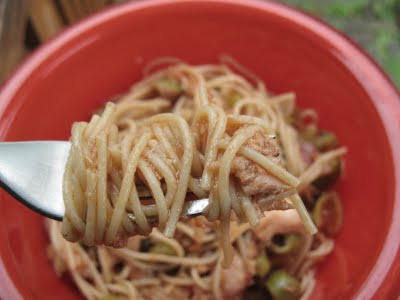
Bear with me here. I know that this title doesnt immediately conjure up images of a delicious dinner. But trust me. This is great. True, its made of decidedly non-gourmet ingredients, and certainly doesnt fit anyones definition of authentic Italian. But if you have a little faith, youll discover what I consider to be the King of Pantry Meals.
Although few Italians begin cooking by cracking open a can of a Campbells vegetable blend beverage, the flavors in this recipe arent too far off tradition. Spaghetti Al Tonno is a typical Italian meatless dish, featuring pasta tossed with tomato sauce and oil-packed tuna. Its a simple meal, and comes in many variations. And this dish fits right in among them. Sure, youre measuring out a commercial drink rather than stewing your own tomatoes. But its a drink featuring a strong tomato flavor, along with the celery and carrots found in some tomato sauces. Chile flakes add some heat, the capers and olives add a nice piquancy, and the oil-packed tuna gives the dish a meaty heft. I was skeptical of this recipe I first encountered it, but it quickly got the thumbs-up in our household. Now I try to make sure were always stocked with the ingredients to throw this together on a busy weeknight.

Pasta with V8 Sauce
serves 4-6
adapted from the Spaghettini with Tuna and V8 Sauce in Nancy Silvertons A Twist of the Wrist: Quick Flavorful Meals with Ingredients from Jars, Cans, Bags and Boxes
Ive tinkered with the quantities in the original recipe, upping the sauce-to-pasta ratio, and increasing the overall yield to ensure leftovers. And although Italians would scoff at the combination of fish and cheese, I sometimes top my serving with a bit of grated Parmesan.
1 14-oz package spaghetti
2 Tbsp olive oil
1 small onion, finely diced
1 stalk celery, finely diced
2 cloves garlic, minced
1 large pinch chile flakes
2 cups V8, or other tomato/vegetable juice
2 6-oz cans oil-packed tuna (dont drain the oil)
2 Tbsp capers
1/4 cup green olives, coarsely chopped
pepper
In a large pot, boil water and cook pasta according to the instructions on the package.
While the water is coming to a boil, heat the olive oil and onion over medium-high heat in a large pot. Saute until the onion is just translucent, about 4-5 minutes. Add celery, garlic, and chile flakes, and cook for a few minutes until the garlic is softened and fragrant. Add the v8, tuna and its oil, capers and olives. Stir, bring to a simmer, and reduce heat to maintain a simmer. Allow to simmer while pasta continues to cook.
When the pasta is cooked, drain it and add it to the sauce. Continue to simmer for a few minutes, to allow the pasta to absorb the flavorful sauce. Season to taste with pepper and salt if needed (although the capers and olives and V8 will probably be salty enough). Enjoy.
Wednesday, May 14, 2014
How to Make A Berry Sauce A Fruit Sauce Using Strawberries and Blackberries for Your Desserts
In Denmark, it was a necessity to have fruits withstand long storage during the winter months. Fresh strawberries (Jordbær) is a Danish favorite. Jordbær literally means earth berries. You can find strawberries in many of the Danish desserts including as a fruit sauce.
With summer coming the farmers markets will have a great assortment of beautiful berries including blueberry, strawberry, blackberry and raspberry. Choose berries that are fresh, ripe and in season for the best flavor. This fruit sauce recipe uses both a strawberry and blackberry sauce.
Easy and cheap to make, this berry sauce is delicious spooned over vanilla ice cream. If you like a warm sauce it is delicious over pancakes, waffles and cheesecake too!
Ingredients:

Other typical fruits incorporated into the Danish cuisine are
*how to make Swedish Glogg for Christmas & cold evenings! (glögg or mulled wine recipe)
*how to make aeblskiver (æbleskiver)
*how to make Danish Christmas Klejner
*how to make easy Danish cucumber salad (arguksalat)
*how to make Danish sugar browned potatoes (brunede kartofler)
*how to make Danish red cabbage (rødkaal)
Please let us know what you think!
Our Scandinavian recipes including Danish, Norwegian, Swedish and Finnish are on http://.blogspot.com/
Follow us either on Twitter @, Blogger, Google+, Google Pages, Pinterest and Subscribe to our YouTube Chanel Scandinavian Today! Lets get cooking Scandinavian foods!
Read more »
With summer coming the farmers markets will have a great assortment of beautiful berries including blueberry, strawberry, blackberry and raspberry. Choose berries that are fresh, ripe and in season for the best flavor. This fruit sauce recipe uses both a strawberry and blackberry sauce.
 |
| Strawberry Blackberry Fruit Sauce for Desserts |
Easy and cheap to make, this berry sauce is delicious spooned over vanilla ice cream. If you like a warm sauce it is delicious over pancakes, waffles and cheesecake too!
Ingredients:
- 1/4 water
- 1 cup of strawberries (fresh or frozen)
- 1 cup of blackberries (fresh or frozen)
- 2 tablespoons of sugar
- 1/4 cup of water
- 1 teaspoon of cornstarch
- saucepan
- measuring cup
- wooden spoon
- teaspoon
- knife
- cuttingboard
- Wash strawberries and/or blackberries. Remove stems; cut large berries in half or roughly chop them.
- Combine water, strawberries or blackberries or both in a saucepan. With this recipe we chose to have both berries. Cook over medium-high heat, stirring occasionally and bring to boil.
- After it gets hot add 2 tablespoons of sugar. Bring to a simmer over medium heat until sugar has dissolved, about 10 minutes. Adjust sugar, if necessary, and cook until dissolved.
- Keep in mind it will take a while until the fruit will become soft. So, you will need to keep stirring the sauce too.
- Next, in a cup or small bowl, mix together the cornstarch and 1/4 cup cold water. Gently stir the cornstarch mixture into the berries so as not to mash the berries.
- Cook until sauce thickens, about 15 minutes.
- Simmer gently until thick enough to coat the back of a metal spoon. Thin sauce with water if it is too thick for your liking.
Other typical fruits incorporated into the Danish cuisine are
- Apples (Æbler) Popular in traditional dishes as winter apples store well. Can be fried and served with Flæsk (thick bacon)
- Blackcurrant (Solbær) means literally sun berries. Eaten fresh with desserts. Can be used with fruit sauces.
- Cherries (Kirsebær) When in season eaten fresh. Cherries are used in making Heering, a famous cherry liqueur, produced in Denmark. Also, cherries are made into the famous cherry sauce or kirsebærsauce. Kirsebærsauce is commonly made for the Danish Christmas Rice Pudding called Risalamand which is on both on our blog and video (below too).
- Gooseberry (Stikkelsbær) literally thorny berries. Used for stewed gooseberries (stikkelsbærgrød).
- Pears (Pærer)
- Plums (Blommer)
- Raspberries (Hindbær) Eaten fresh. Also, used for preserves and fruit sauces.
- Redcurrants (Ribs) Made to jelly or simply mixed raw with sugar as (Rysteribs). Also used with fruit sauces. Served to roast.
*how to make Swedish Glogg for Christmas & cold evenings! (glögg or mulled wine recipe)
*how to make aeblskiver (æbleskiver)
*how to make Danish Christmas Klejner
*how to make easy Danish cucumber salad (arguksalat)
*how to make Danish sugar browned potatoes (brunede kartofler)
*how to make Danish red cabbage (rødkaal)
Please let us know what you think!
Our Scandinavian recipes including Danish, Norwegian, Swedish and Finnish are on http://.blogspot.com/
Follow us either on Twitter @, Blogger, Google+, Google Pages, Pinterest and Subscribe to our YouTube Chanel Scandinavian Today! Lets get cooking Scandinavian foods!
Sloppy Sauce aka Tahini with Miso and Almond Butter

Several years ago, I left my dog alone at a friends house for an evening, and returned to find that he had eaten all of the dog food in the house. All of it. When he came to greet us at the front door, he was noticeably larger. We rushed our barrel-shaped pup to the veterinarian, who pronounced him fine (and showed us an amusing x-ray, wherein you could still see all of the individual pieces of kibble in his overly-full stomach). In addition to piece of mind (and a hefty bill), we were given my absolute Favorite Diagnosis Ever: dietary indiscretion. Seriously. Dietary Indiscretion. Its sort of like diagnosis: bad decision-making. I suffer from that all the time.
For the most part, my diet is fairly healthy, full of fresh produce and whole grains and all that good stuff. But sometimes its not. Sometimes Im dining out, and the deliciously retro ice cream sundae on the menu calls to me. Or Im catching up with friends over happy hour, and after a few drinks an order (or three) of fries suddenly seems like a phenomenally brilliant idea. Or I am eating something so addictively delicious, say these little cheese-filled puff pastry palmiers at my friend Sarahs house, and I just cannot stop. Dietary Indiscretion.
After such poor choices, weve come up with a recovery meal known around our household as Hippie Dinner. Its the best way to sop up booze, grease, and bad decisions, and set you on the path to dietary righteousness. There are three elements: whole grains (in the form of some brown rice or quinoa); protein (in the form of marinated tofu or a piece of lean fish); and a huge pile of steamed or sauteed vegetables. Actually, make that 4 elements: the whole plate is topped off with a tahini variation called sloppy sauce.
Sloppy sauce, inspired by a friend who needed to recover from a nearly all-pizza diet, is a great way to make a huge pile of steamed kale and sweet potatoes much more exciting. It starts off like a traditional Middle Eastern tahini sauce, mixing sesame paste with lemon juice and garlic. But its given a bit of savory heft (and arguable health benefit) from a scoop of miso, and delicious nuttiness from almond butter. I like to further play up the East meets Middle East dimension by stirring in a bit of grated ginger, or a handful of scallions or chopped cilantro if youve got. And sometimes I emphasize the peanut sauce resemblance by using lime juice instead of lemon. As suggested by its name, sloppy sauce is a pretty informal affair, and can be easily adapted to your taste. And it can be enjoyed any time, whether youre recovering from a dietary indiscretion or not.

Sloppy Sauce (aka Tahini with Miso and Almond Butter)
yields ~3/4 cup
1 Tbsp miso (any type)
2 Tbsp tahini
2 Tbsp almond butter
1 clove garlic, crushed
1/2" ginger, grated
juice of 1 lemon
water
handful minced scallions and/or cilantro (optional)
Mix together the miso, tahini, and almond butter until well combined. Stir in the garlic and ginger, then the lemon juice. Add water, a little at a time, until it reaches a thick-but-pourable consistency (~1/4+ cup). Stir in the scallions and/or cilantro, if using. Taste, and adjust seasonings as needed. Pour over whatever hippie concoction you desire. The sauce will thicken upon standing, so just stir in a little additional water or lemon juice to loosen leftovers.
How to Make Rum Sauce for Desserts and for Flavored Whipped Cream Bread Pudding
Rum Sauce is perfect over ice cream, custard, cake and bread pudding. Here is my version of rum sauce. Enjoy!
Ingredients
- 1 cup brown sugar
- 1/2 cup (1 stick) butter
- 1 teaspoon of cinnamon
- 1/2 cup of heavy cream
- 2 tablespoon of rum or to taste
Kitchen Utensila
- meausring cup
- medium saucepan
- whisk
- measuring spoon
Instructions
In a saucepan, melt butter and brown sugar over medium heat. Whisk to blend well until the sugar is melted.
Once the mixture is melted then add the cinnamon and cream. Cook over low heat, stirring constantly, until mixture thickens. (Do not allow to simmer, or it may curdle.)
Keep stirring. Finally add two tablespoons of rum, cook this for about 5 minutes on low heat. Keep stirring. If it is turn to thick add a little cream or milk to thin it out. If you like more rum flavor add more to taste. Remove from heat.
Whisk before serving. The sauce should be soft, creamy, and smooth.
Can you put it on ice cream. Pour over bread pudding. Serve warm or cold.
Saturday, May 10, 2014
Skidne Æg “Dirty Eggs” Eggs in Mustard Sauce for a Danish Easter Lunch
Easter is almost here! Try this Egg in Mustard Sauce recipe at your upcoming Easter lunch or spring brunch! In Denmark, Skidne Æg is an old-fashioned dish. Every Easter (Påske), Danish homes prepare Skidne Æg “Dirty Eggs” for their Easter lunch. However, this Easter dish is a very easy delicious dish and can be served anytime. We like to have chopped chives or parsley with a slice of rye bread on the side.
Happy Easter!
Karen Grete
Ingredients
Happy Easter!
Karen Grete
Ingredients
- 6 eggs (medium size)
- 6-8 slices of fried bacon
- slices of rye bread (rugbrød)
- 50 g butter
- 3-4 tablespoons of wheat flour
- 1 1/2 cup of milk
- 2-3 tablespoons of mustard
- 1 tsp salt
- freshly ground pepper
- fresh cut chives or parsley
Preparation
There are a couple of steps to do but it is pretty easy and quick to make.
Eggs: First bring water to boil in a pan. Cook the eggs at low heat and cover for approx. 6 minutes (depending on the size of the eggs). The result is the outer layer of the yolk should be slightly firm. The yolk in the center should be soft. So the eggs should not be hard boiled nor soft boiled just in-between. When done the eggs are done boiling, cool the eggs with cold water. Then, peel the eggs and set aside.
Mustard Sauce: Melt the butter in a heavy-bottomed saucepan over high heat, but without browning. Stir in the flour and cook the mixture well until the paste cooks and bubbles a bit. Stir constantly and do not let the mixture brown. Add half of the milk and keep stirring as the sauce thickens. Beat the remaining milk in little by little. Let the sauce cook on low heat and keep stirring. Add salt and pepper to taste. Add your favorite mustard.
Serve: Spread the mustard sauce on a plate. Slice the eggs in half. Place the half "smiling" eggs and bacon on the plate. Sprinkle with chives or parsley. Serve with rye bread.´
Thursday, May 8, 2014
How To Make Homemade Creamed Kale Sauce Grønlangkål For Danish Summer Dishes
Creamed kale sauce has been eaten with pork or tongue and potatoes in Denmark and Nordic countries for several centuries. A hearty meal great for the summertime when you have fresh grown kale. Below is a recipe to make homemade creamed kale sauce (grønlangkål).
Ingredients:
Prepare the Kale
Rinse kale well in large bowl of warm water. Place the kale in a colander and drain. Rip the leaves off the stem. Discard any discolored leaves and tough stems.
Then cook the kale in a pot of water. Add a little bit of salt into the water. Cook for about 20 minutes in order for the leaves to get soft. Then scoop the kale out of the pot, Slice the leaves crosswise into ½ inch thick slices with a sharp knife on a cutting board. Set it aside in a bowl.
Make the Cream Sauce
Melt the butter in the saucepan over medium heat.
Add the flour and whisk until the flour is absorbed into the butter (this a "roux"). Stir for about 2-3 minutes until it becomes thick, smooth and pale beige in color.
Add the milk gradually about 1/3 at a time, and whisk constantly. Keep stirring and bring to boil. Add Kale juices too. You dont want this to burn. Stir constantly for about 5-6 minutes until smooth and thick.
If the sauce is too thick, you need to prime with milk or kale juice. If it is too thin, boil a little more. Avoid the sauce tasting like flour by stirring well and carefully.
Turn down the heat. Add chopped kale. Add nutmeg for flavoring. Season with salt and pepper. Simmer the sauce for 1-2 minute without boiling.
Cover to keep warm until you are ready to serve. Serve "grønlangkål" with either cooked smoke ham or tongue and over potatoes. Enjoy!
Read more »
Ingredients:
- 1/2 tablespoon of butter
- 1/2 tablespoon of flour
- 1 cup of milk (other options is fish stock, chicken stock or beef stock)
- 1 large bunch of washed kale, finely chopped
- Salt and pepper
- nutmeg
- cutting board
- sharp knife
- small-medium heavy saucepan
- wooden spoon
Prepare the Kale
Rinse kale well in large bowl of warm water. Place the kale in a colander and drain. Rip the leaves off the stem. Discard any discolored leaves and tough stems.
Then cook the kale in a pot of water. Add a little bit of salt into the water. Cook for about 20 minutes in order for the leaves to get soft. Then scoop the kale out of the pot, Slice the leaves crosswise into ½ inch thick slices with a sharp knife on a cutting board. Set it aside in a bowl.
Make the Cream Sauce
Melt the butter in the saucepan over medium heat.
Add the flour and whisk until the flour is absorbed into the butter (this a "roux"). Stir for about 2-3 minutes until it becomes thick, smooth and pale beige in color.
Add the milk gradually about 1/3 at a time, and whisk constantly. Keep stirring and bring to boil. Add Kale juices too. You dont want this to burn. Stir constantly for about 5-6 minutes until smooth and thick.
If the sauce is too thick, you need to prime with milk or kale juice. If it is too thin, boil a little more. Avoid the sauce tasting like flour by stirring well and carefully.
Turn down the heat. Add chopped kale. Add nutmeg for flavoring. Season with salt and pepper. Simmer the sauce for 1-2 minute without boiling.
Cover to keep warm until you are ready to serve. Serve "grønlangkål" with either cooked smoke ham or tongue and over potatoes. Enjoy!
Subscribe to:
Posts (Atom)